

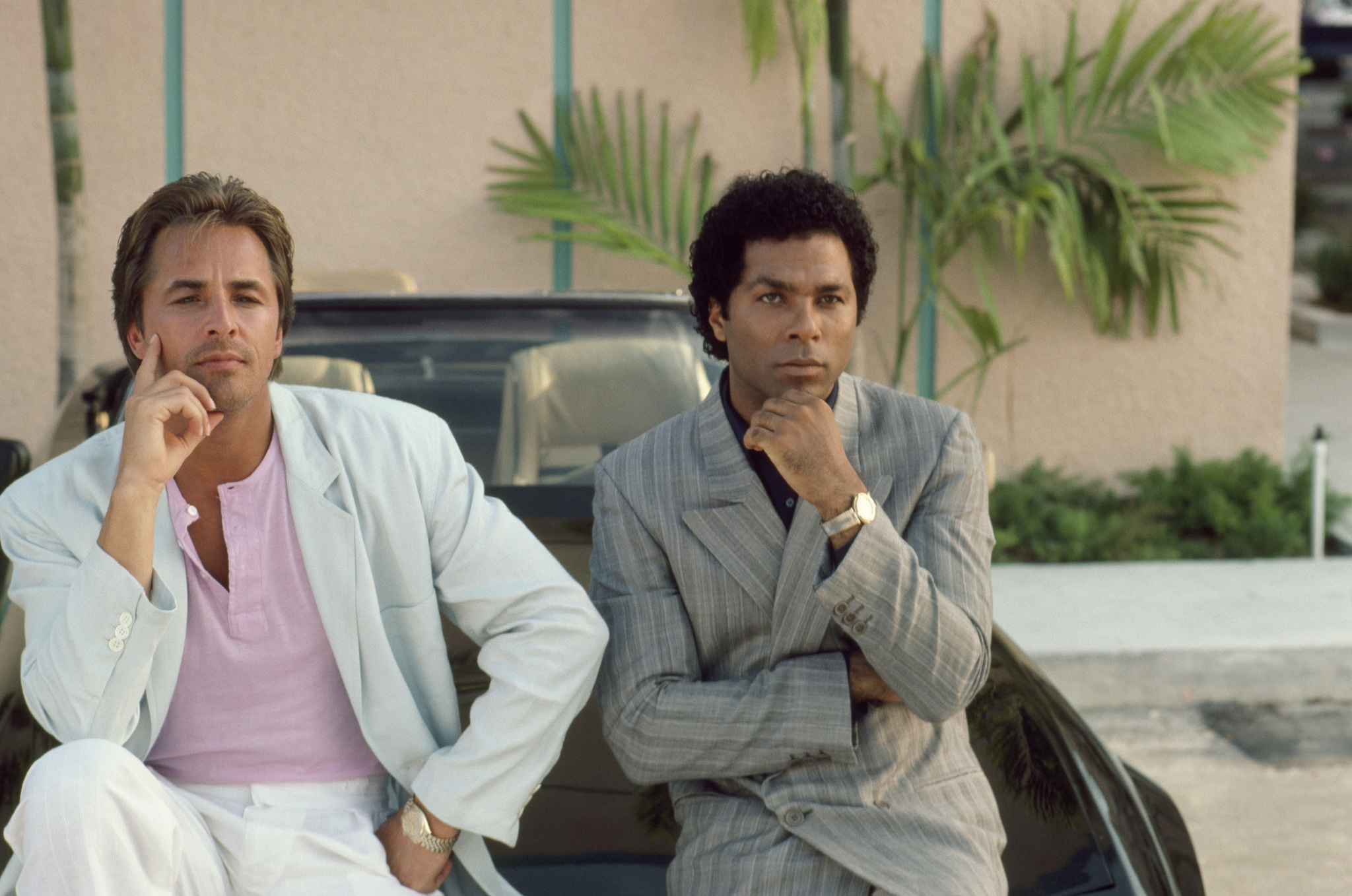
Miami Vice is now streaming on Amazon Prime, but when Miami Vice premiered in 1984, it wasn’t just another cop show—it was a cultural phenomenon that defined an era. Created by Anthony Yerkovich and executive produced by Michael Mann, the series encapsulated the style, music, and socio-political climate of 1980s America like no other television show. More than just a crime drama, Miami Vice was a visual and sonic spectacle that reflected the excess, ambition, and anxieties of the decade.
Aesthetic Revolution: Fashion and Visual Style
One of Miami Vice’s most enduring legacies is its aesthetic. The show’s pastel-colored suits, linen blazers over T-shirts, sockless loafers, and designer sunglasses became emblematic of 1980s fashion. Don Johnson’s portrayal of Detective Sonny Crockett transformed him into a fashion icon, inspiring men across America to adopt a similarly stylish, relaxed look. The series’ commitment to high-end fashion extended beyond its leads, showcasing the designer labels and flamboyant trends that defined the decade’s culture of wealth and excess.
Beyond fashion, the show’s cinematography revolutionized television. Unlike traditional police procedurals, Miami Vice had a cinematic look, with its extensive use of neon lighting, Art Deco architecture, and carefully curated color palettes. This visual flair, heavily influenced by New Wave aesthetics, helped establish Miami as a glamorous yet dangerous backdrop that felt both hyper-real and dreamlike.
The Soundtrack of a Generation
Music played an integral role in Miami Vice, making it one of the first television shows to integrate contemporary pop and rock hits into its storytelling. Artists like Phil Collins, Glenn Frey, Tina Turner, and U2 provided the emotional undercurrents of the series, while Jan Hammer’s iconic synth-heavy theme song became synonymous with the decade itself.
The show’s use of music wasn’t just decorative—it was strategic. Many scenes played out like music videos, emphasizing mood and style over traditional exposition. This approach helped redefine how television could incorporate music and set a precedent for future shows and movies.
The Dark Side of the American Dream
While Miami Vice was famous for its glamour, it also painted a portrait of the darker side of the 1980s. The show’s narratives revolved around Miami’s drug trade, organized crime, and political corruption, reflecting real-world issues that dominated headlines at the time. The 1980s were marked by the rise of the cocaine epidemic and the Reagan administration’s War on Drugs, both of which Miami Vice explored through its storylines.
Detectives Sonny Crockett and Ricardo Tubbs, played by Don Johnson and Philip Michael Thomas, embodied the tension between justice and moral compromise. Their work as undercover officers forced them into close contact with the very lifestyle they fought against—extravagant wealth, fast cars, and a never-ending stream of vices. This struggle mirrored the decade’s larger themes of ambition, greed, and ethical dilemmas, resonating with audiences who saw these conflicts play out in real life.
Cultural Influence and Legacy
Miami Vice wasn’t just reflective of the 1980s—it actively shaped it. It influenced fashion designers, musicians, and filmmakers alike. Directors such as Michael Bay and Quentin Tarantino have cited the show as a major inspiration for their work, and its stylistic elements can be seen in movies like Scarface (1983) and Drive (2011).
The show’s success also paved the way for more serialized and cinematic storytelling on television, leading to the prestige dramas of the 21st century. Without Miami Vice, shows like The Sopranos, Breaking Bad, and True Detective might not have taken the same narrative risks.
Conclusion
Miami Vice was more than just a TV show—it was a time capsule of the 1980s, capturing the decade’s glitz, grit, and contradictions. Through its trend-setting fashion, groundbreaking use of music, and exploration of America’s socio-political landscape, the series reflected and shaped the cultural consciousness of its era. Even today, its impact is undeniable, proving that sometimes, television doesn’t just mirror history—it makes it.
Stream all seasons now on the Amazon Prime video app.