

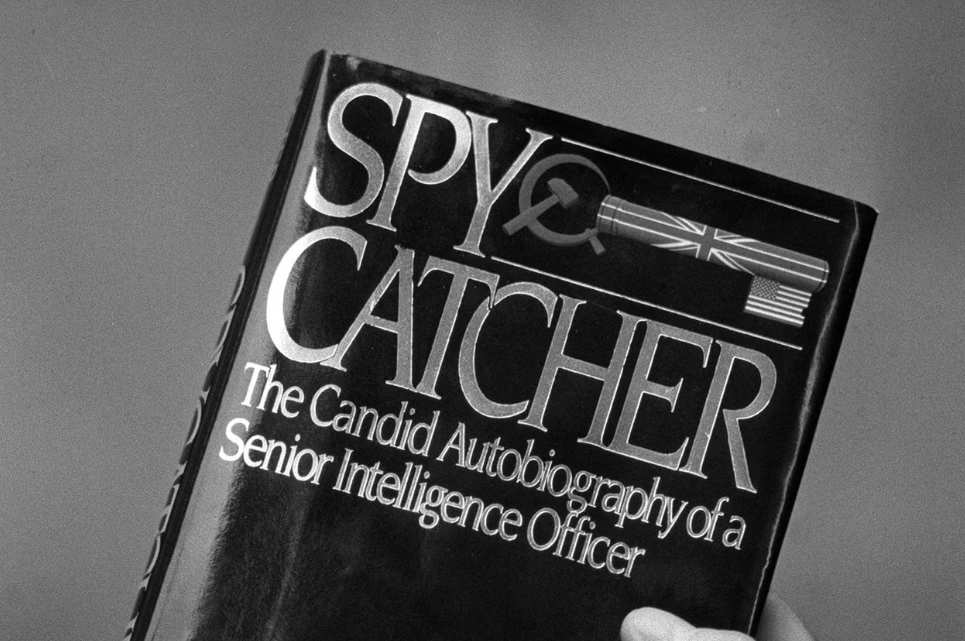
When Spycatcher was first published in 1987, it wasn’t just another espionage book—it was a cultural flashpoint.
Written by former MI5 officer Peter Wright, the book offered a rare and controversial glimpse inside the British intelligence services. What followed was a storm of legal battles, political tension, and public curiosity that turned Spycatcher into one of the most talked-about books of the decade.
But beyond the headlines, its real legacy lies in how it captured the imagination of readers—and helped shape the appetite for a more grounded, psychologically complex style of spy storytelling.
The Book the Government Tried to Ban
Part of what made Spycatcher so compelling was the controversy surrounding it.
The British government attempted to suppress its publication, leading to a major legal battle that culminated in the Spycatcher trial. Ironically, the attempt to ban the book only increased public interest.
Readers weren’t just picking up a spy memoir—they were reading something that felt forbidden, insider, and potentially explosive.
That sense of “hidden truth” gave Spycatcher an authenticity few novels could match.
A Real-Life Window Into Espionage
Unlike fictional spy thrillers filled with gadgets and high-speed chases, Spycatcher leans heavily into the realities of intelligence work:
-
Surveillance and counter-surveillance
-
Internal suspicion and betrayal
-
Bureaucracy and secrecy
-
Psychological pressure
This grounded approach resonated with readers who were already drawn to more realistic espionage fiction—especially fans of John le Carré.
The Rise of “Smileycore” Spy Fiction
Long before the term “Smileycore” became popular, John le Carré had already redefined the genre with works like Tinker Tailor Soldier Spy.
Instead of glamorous spies, readers got George Smiley: quiet, observant, and operating in a world of moral ambiguity.
Spycatcher fits perfectly into that same tonal space—even though it’s non-fiction.
It shares key elements with “Smileycore” storytelling:
-
A focus on tradecraft over action
-
Internal conflict within intelligence agencies
-
The idea that the real enemy might be inside the system
-
Slow-burn tension built on information, not explosions
While Spycatcher didn’t directly influence le Carré’s earlier work, it reinforced and validated that style. It showed readers that the quieter, more cynical version of espionage wasn’t just fiction—it was reality.
Truth That Feels Stranger Than Fiction
One of the most gripping aspects of Spycatcher is how unbelievable parts of it feel—yet they’re presented as real events.
Allegations of Soviet moles at the highest levels of British intelligence, secret operations, and internal paranoia all combine to create a narrative that feels as tense as any novel.
For readers used to fictional espionage, it blurs the line between reality and storytelling in a way that’s deeply engaging.
Why Fans of Tinker Tailor Soldier Spy Will Love It
If you enjoyed Tinker Tailor Soldier Spy, Spycatcher is a natural next read.
Here’s why:
-
It’s grounded in realism – No glamour, just methodical intelligence work
-
It explores betrayal and mistrust – A core theme in Smiley-style stories
-
It rewards patience – The tension builds through detail and deduction
-
It offers insider perspective – Adding weight to the kind of stories le Carré fictionalised
In many ways, Spycatcher feels like stepping behind the curtain of a Smiley novel—seeing the machinery that inspired the fiction.
A Lasting Legacy
Decades after its release, Spycatcher remains a key piece of Cold War literature.
It’s not just important because of the controversy—it endures because it delivers something readers still crave: an authentic, unvarnished look at the hidden world of espionage.
For anyone drawn to intelligent, slow-burning spy stories, it’s essential reading.
Get Your Copy
If you’re ready to dive into one of the most controversial and compelling espionage books ever published:
Buy Spycatcher by Peter Wright
Final Thoughts
Spycatcher didn’t just capture attention in the 1980s—it helped define what readers expect from serious spy writing.
If you love the morally complex, detail-rich world of le Carré, this is as close as you’ll get to the real thing.
And once you’ve read it, you may never look at fictional espionage the same way again.

admin
Vivamus feugiat eu arcu vel scelerisque.